Arriving at Delhi Airport (T3) as a Foreigner: What to Expect at Immigration
Published
By Herbert Kanale. I landed at Delhi Indira Gandhi International Airport, Terminal 3, on 17 October 2026, on a foreign passport. This is that arrival, told in order. The timings, prices and sources are kept up to date on the Delhi T3 field report.
Before you fly
Three documents matter, and none of them is complicated once you know which is which.
- The e-Visa, applied for on the official Indian Visa Online portal. Apply for it first: mine took 1 day the first time and 3 days the second.
- The e-Arrival Card, from the Bureau of Immigration, filed on indianvisaonline.gov.in/earrival shortly before the trip.
- The Air Suvidha 2.0 health declaration, filed on airsuvidha.civilaviation.gov.in.
How early you can file the last two isn’t settled: on the day I landed, the Air Suvidha portal said 72 hours while the ministry’s launch release had said 24. The field report lists both, with dates. I had both forms on my phone when I landed.
Paper or phone? Officers accept both. I carried the e-Visa printed and the two forms on my phone, which worked fine, but printing all three is the safer bet.
The last thing to sort out before you fly is mobile data for the first hour. You’ll want it in places you might not expect, and the airport Wi-Fi has a catch, which I come to below.
The arrival, step by step
Off the plane, 11:45. The corridor is lined with signs; one says the Air Suvidha form is mandatory, with a QR code to fill it in on the spot.
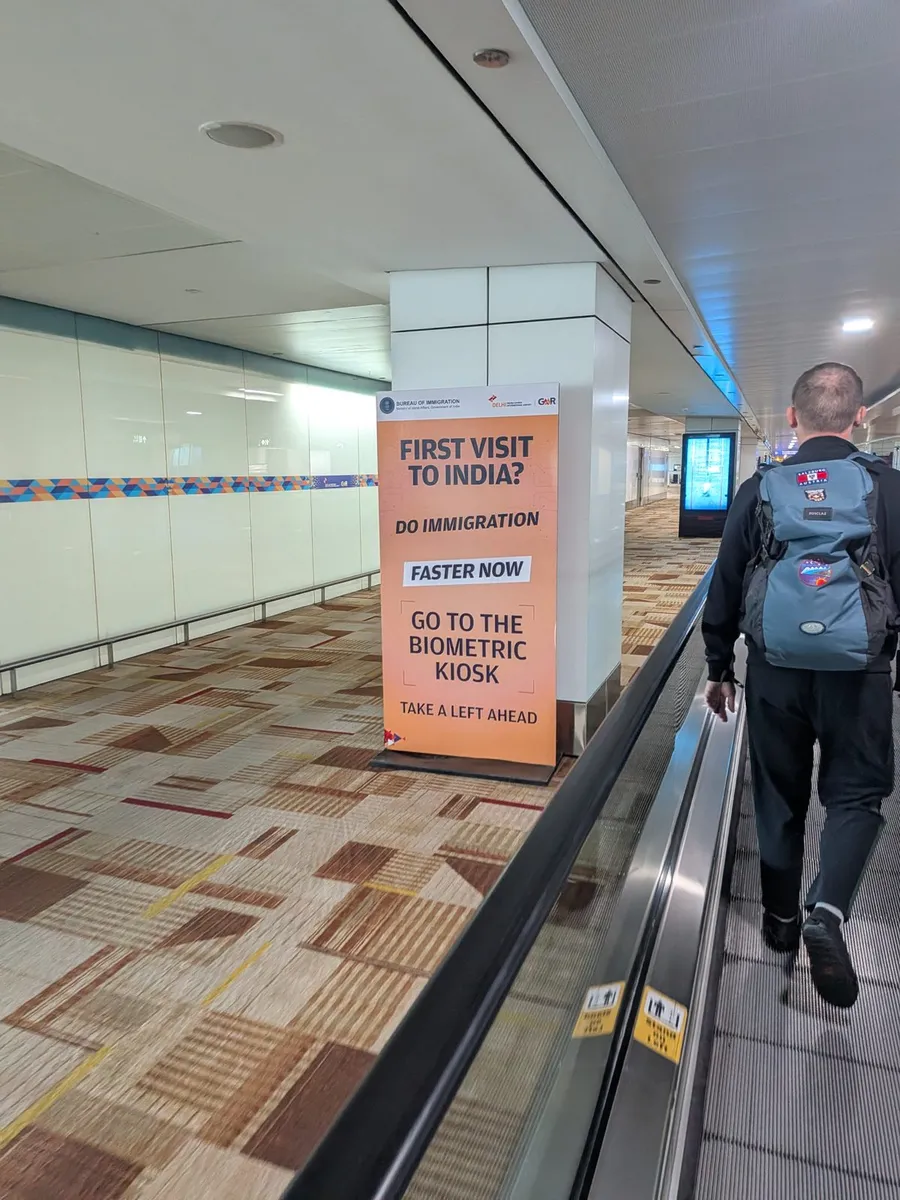
The biometric kiosks. A sign in the corridor reads “First visit to India? Do immigration faster now. Go to the biometric kiosk.” First-time visitors were directed to a row of five kiosks before immigration, with an agent pointing people to them. On my first visit the fingerprint scan took several attempts, so don’t worry if the first one fails.
The health counter. Just before immigration there’s a counter that hands out paper health forms to anyone who didn’t file online. Nobody checks anything there. The check happens at the immigration desk.
The immigration queue, 12:00. I reached it about fifteen minutes after leaving the plane, with stops; walking briskly it’s closer to ten. The hall is split into separate areas for Indian passports, foreign passports, OCI holders and business class, so check the signs before you queue.
At the desk. Count on three to four minutes per traveller. The officer looked at my passport, my printed e-Visa and the health declaration on my phone, without scanning it, and didn’t ask for the e-Arrival Card at all. What was checked at each step is in the field report.
Customs. Through the green channel: bags weren’t scanned and nobody asked for the documents again.
The arrivals hall, about 12:20. Roughly 35 minutes from the aircraft door. On earlier trips I’ve counted 30 to 45.
What surprised me
The e-Arrival Card wasn’t asked for. I had filed it online, and my guess is the officer could see it in the system and only checks it from time to time. That doesn’t make it optional: on an earlier trip I had it printed and the officer took it and scanned it, and on another, when I hadn’t filed it, I was asked for it. File it before you fly.
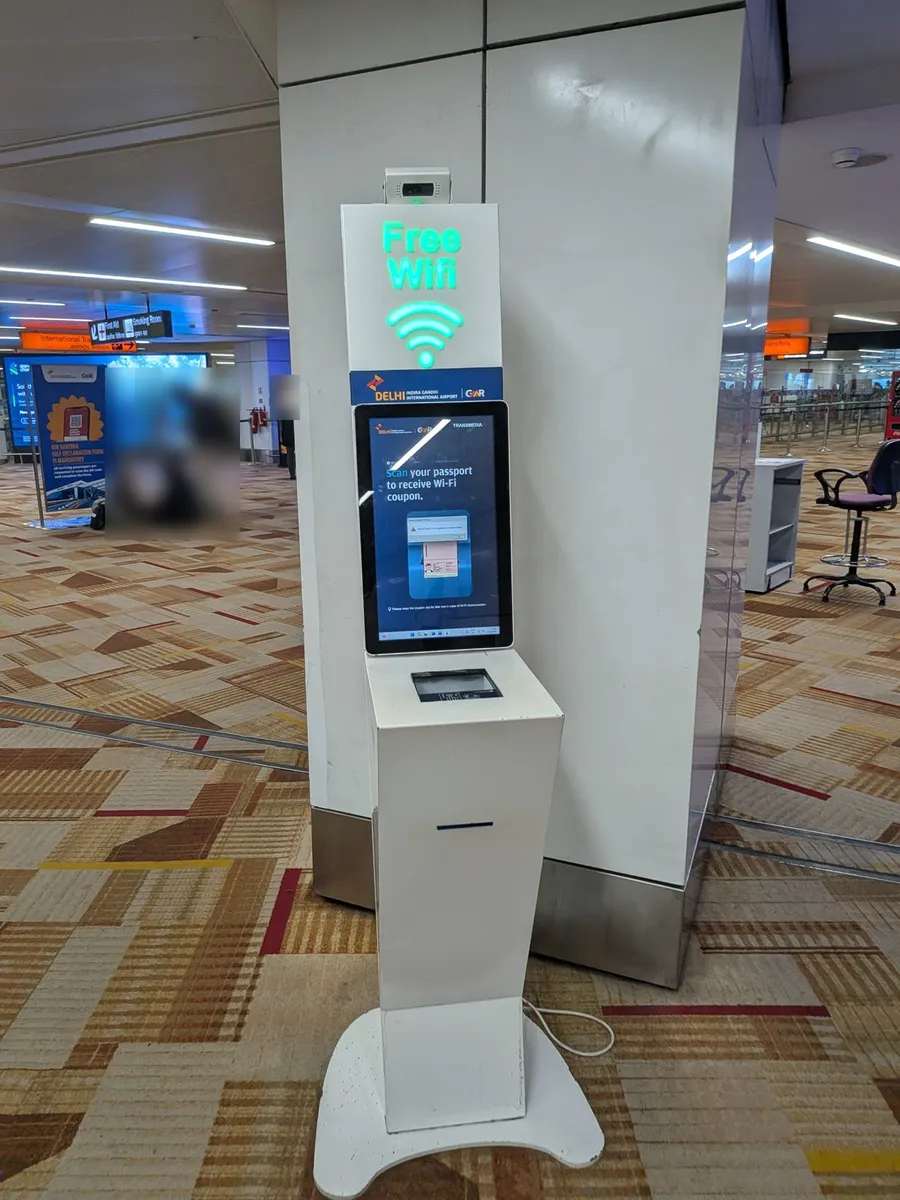
The airport Wi-Fi needs your passport. Without an Indian phone number you scan your passport at a kiosk and type in a code from a printed slip. It works, and it’s fast: 100 Mbps on my test. The kiosk is on the walk from the gates, right where the path splits between connecting flights and immigration/baggage. Get your coupon there: once you’re in the immigration queue, it’s behind you. The step-by-step login is in the field report.
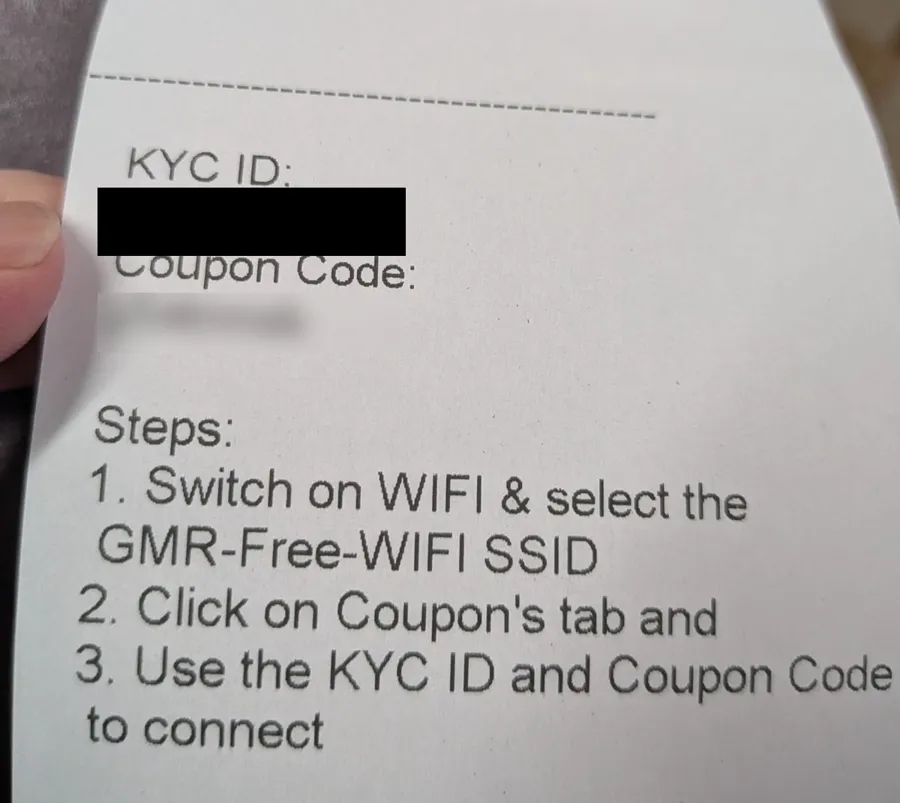
That matters if you forgot a form. On that earlier trip, the officer let me fill in the e-Arrival Card on my phone in the queue without losing my place, but only because I had roaming data; walking back to the Wi-Fi kiosk would have cost me my place. This time US T-Mobile roaming worked on arrival, weak but enough.
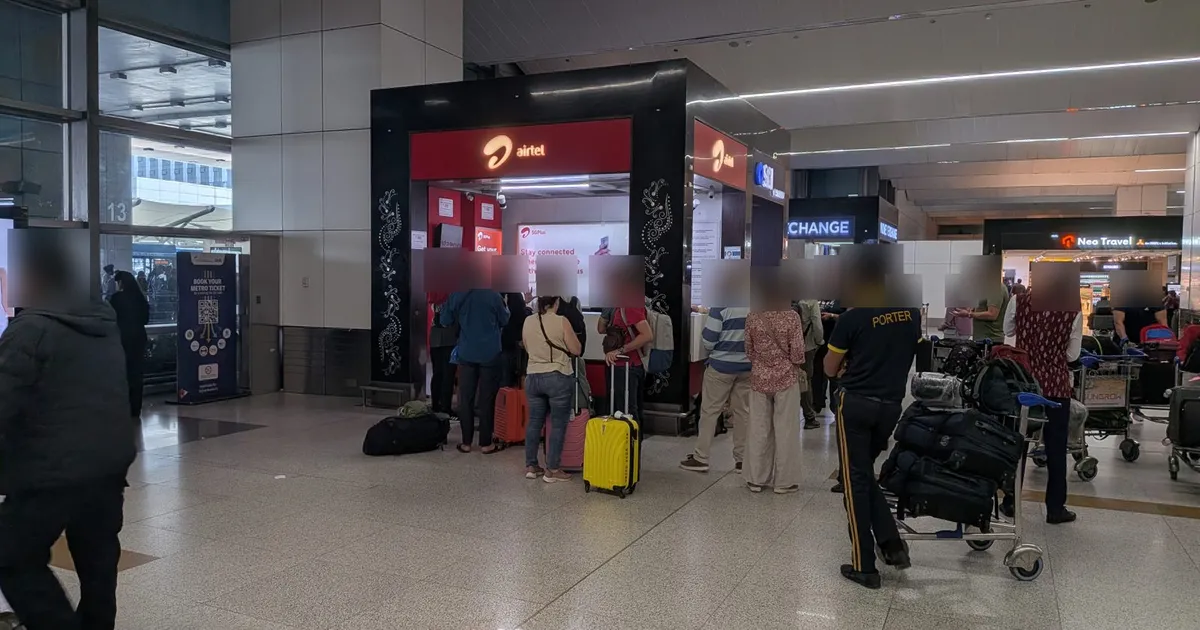
One SIM counter, and a queue. In the arrivals hall I saw a single SIM counter, Airtel, with about 25 people waiting around 12:20. The board price is in the field report; the queue looked like the real cost.
What I’d do differently
I’d file both short forms before boarding and save them offline, so I’m not relying on any connection at the desk. I’d make sure my phone has data the moment the plane lands, through roaming from home or an eSIM installed before the flight, so a forgotten form or a ride booking doesn’t send me back looking for the Wi-Fi kiosk. And if I wanted a local SIM, I’d decide that before joining the Airtel queue, not after.
Before you fly: checklist
- e-Visa approved.
- e-Arrival Card filed.
- Air Suvidha 2.0 declaration filed (or fill in a paper form at the health counter).
- A printed copy of all three in your bag. Digital copies on your phone are accepted too, but paper is the safer bet if your battery or connection fails.
- Mobile data that works on landing.
- Your hotel address and booking saved offline.
Photos: Herbert Kanale, 17 October 2026, CC BY 4.0. All data, sources and dates: Delhi T3 arrival field report.